
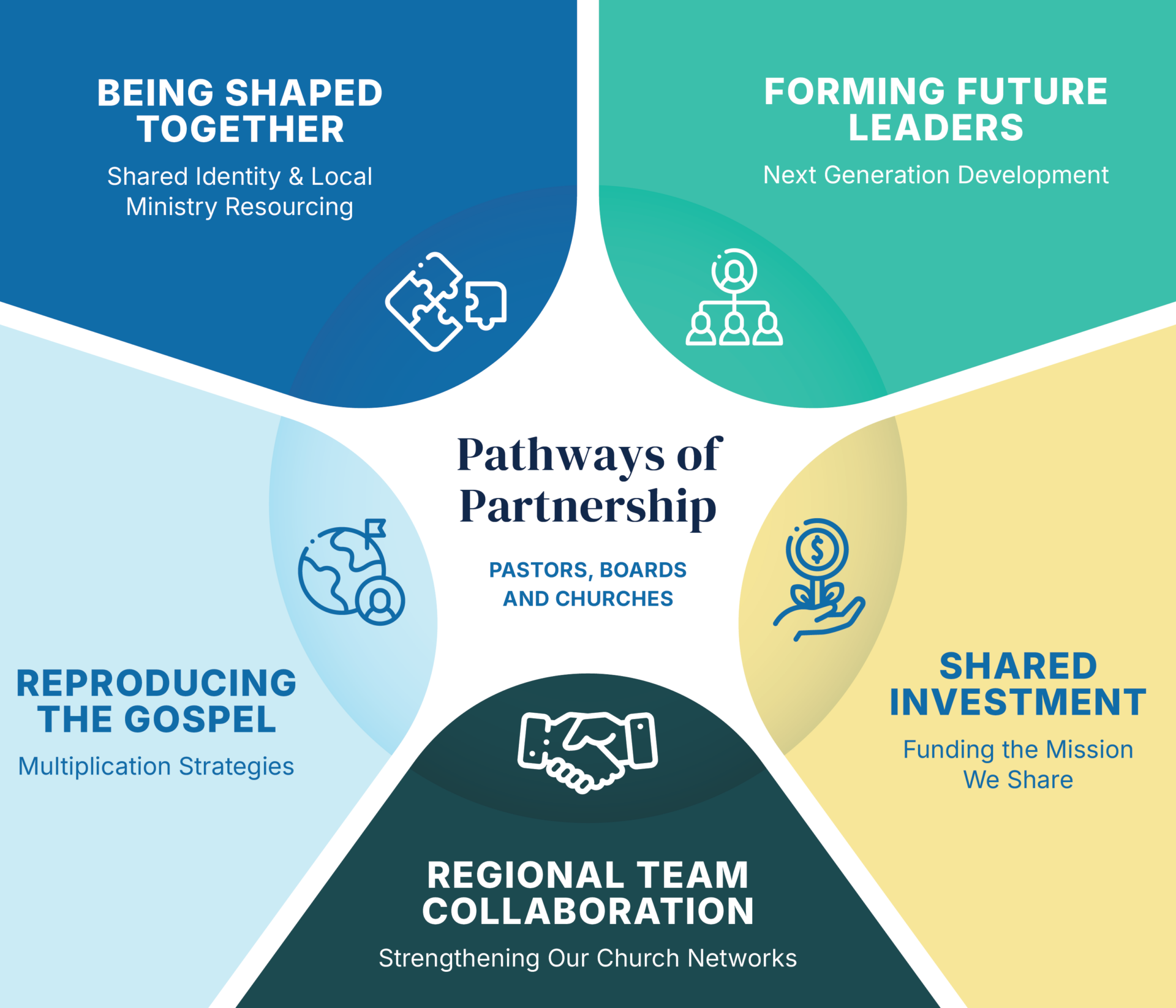
| When I was 8 years old, I ran into a basketball hoop post while playing on the playground at school. Think “Wile E. Coyote speed SMASH” right into the post. It’s not a surprise that I ended up in the school nurse’s office. I probably had a concussion, but those were the days before concussion protocols. The school nurse did give me an eye exam (probably thinking about why I didn’t see the post in the first place) and she told my parents to take me to the eye doctor. That day I came home with my first pair of glasses. Today, I wear contact lenses because without them, I can’t see a thing. My vision is very bad without correction. When you go to the optometrist, they measure your eyesight for lenses, and you get to pick out frames for glasses. To see properly, I need both lenses and frames. The Bible also uses language about seeing with vision to help us understand spiritual truth. We all have a lens through which we see and understand the world and we also need a frame to hold our lenses. As I’ve been listening and learning in this new season of Converge North Central, I’ve been working with the CNC staff team, CNC board, and key CNC regional leaders to develop a frame that we can use to see our world. I like to think of it as a strategic framework that we can use to build the collaborative ministry of our churches. The key language to our strategic framework is the word partnership. Every church is invited to partner with CNC and with other churches as the Lord leads. The framework helps us make wise decisions, prioritize resources, and execute ministry plans. You’ll notice that the Pathways of Partnership in this framework will now organize this monthly CNC Newsletter. I’ll describe each of them briefly here. Being Shaped Together – Shared Identity & Local Ministry Resourcing. This pathway is about who we are as Converge. We share a theological identity through our statement of faith, shared heritage of evangelical pietism, and the irenic spirit. Our pastors and churches are being shaped together through the collaborative relationships that we enjoy. Forming Future Leaders – Next Generation Development. We desire to intentionally invest in those who God is calling to serve His church for the next generation. Key partnerships with Bethel University and our own vibrant ministry of reaching and developing young people at Trout Lake Camps are essential to this pathway. We envision strengthening the local church through internship experiences and pastoral training opportunities for young leaders. Shared Investment – Funding the Mission We Share. Funding fuels ministry. I don’t need to tell pastors how often Jesus taught about money. As Converge adds value to the local church, we believe that the opportunity for the shared investment from the local church to CNC will become a sensible financial investment. We know that shared investment will only grow at the speed of trust, so our commitment to you is to be trustworthy leaders who seek to add kingdom value to your church. Regional Team Collaboration – Strengthening Our Church Networks. The currency of our ministry is relationships. We currently have 16 active Regional Teams of pastors who meet together for encouragement, prayer, and shared ministry. We still have a need for at least 4 more regional leaders in key locations. These networks of pastors make up a significant footprint of the ministry of Converge North Central. The work that each regional team does together is advancing CNC’s mission. Regional Teams are foundational to everything that CNC will accomplish to start new churches, strengthen existing churches, and send more gospel workers both here and far. Reproducing the Gospel – Multiplication Strategies. Planting churches. Evangelism Cohorts. Churches going multi-site. Raising up missionaries. All of this hard ministry work fits within this pathway of Reproducing the Gospel. Each local church context will engage with multiplication in different ways. CNC is equipped to partner with your church in any and all of these spaces of helping to reach more people with the gospel of Jesus Christ. It’s our deepest passion and strongest desire to see more people come to know and love Jesus. Each of the Pathways of Partnership is an opportunity for the local church to collaborate with CNC staff, other pastors, and strategic partners because we believe that God can do more with us together than we can do alone. If you’re ready to take a step forward on any one of the Pathways of Partnership our team would love to hear from you. In Christ, |
 Andy Kumpel Regional President |

“What is Converge?” “What does Converge even mean?” “Why did we ever change the name?” I hear some version of this question fairly regularly. My answer: Converge is doing more through collaboration than we can do alone. When more than one local church “converges” together for the sake of God’s kingdom, that defines who we are becoming. We shape one another through our relationships.
One of Jesus’ first activities in his public ministry was calling other people to join him in fishing for people. Paul planted, Apollos watered, and God gave the increase. Moses couldn’t hold his arms up alone – he needed Aaron and Hur. Collaboration is all over God’s word. In fact, we believe that God’s mission of reaching people with the Gospel of Christ doesn’t happen without our collaboration with God’s Spirit.
We are thrilled that you are a part of this movement called Converge – where we want to collaborate together for the sake of the Gospel of Jesus Christ.

The future of the church is always in God’s hands. And the future of the church depends on the leaders of today working intentionally to develop the leaders of tomorrow. That’s why we want to invest in forming future leaders. We are excited to share that Bethel University has developed a new worship ministries minor as a part of their missional ministries program. Worship leaders are in short supply now, so the need is there today.
The Worship Ministries Minor at Bethel University was created to help develop the next generation of worship leaders for the local church through a collaborative partnership between the university and the local church. We believe Bethel University and the local church each have a vital role to play in equipping students for faithful worship leadership. As part of this commitment, we invite local churches to partner with us by providing worship-leading internships that fulfill the minor’s two internship course requirements, giving students the opportunity to learn directly from experienced ministry professionals, grow in their calling, and experience the joy and impact of serving the local church.
Please contact Pastor Nick Cocalis if you are interested in partnering with Bethel to develop the next generation of worship leaders:nick-cocalis@bethel.edu

“As a form of ministry, fundraising is as spiritual as giving a sermon, entering a time of prayer, visiting the sick, or feeding the hungry” Henri Nouwen
The landscape of generosity and tithing is shifting in the US. Giving USA Foundation, The Giving Institute, and the Indiana University Lilly Family School of Philanthropy continue to provide the latest research on US charitable giving. This is a humbling quote from their Giving USA 2025 report which states Americans gave $617.2 billion dollars to charity in 2025.
“Giving to religious organizations has been decreasing as a share of total giving: from 1985-1990 an average of 56 percent of the total giving went to the religious sector. In the five-year period 2020-2025, total religious giving averaged 25 percent of that total.”
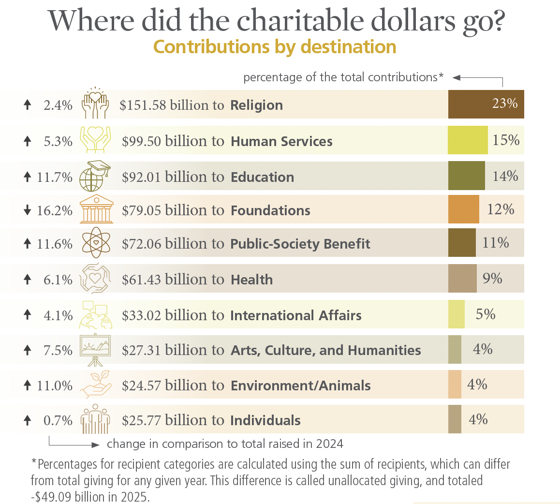 |
This is a humbling stat for the church and as CNC leaders, we can lead in biblical stewardship by providing our congregations valuable instruction and guidance on how to manage our money.
During the upcoming Fix The Finances 3.0 event on November 5-6 we will be discussing strategies on how to excel in this area and provide practical next steps for educating your congregation on how to practice generosity. Register now

At our core, Converge North Central desires to see churches reproducing the Gospel! This can happen in a number of ways. Community outreaches, evangelistic Bible studies, preaching and teaching, mission teams, evangelism training, and multiplication through new churches are just a few.
As is often the case, such emphasis in the life of a church ebbs and flows. There are seasons of evangelistic momentum as well as seasons of distraction and even drift.
A brief review of our history reveals a consistent pattern: when confronted with drift or the challenges of a changing culture, our movement has moved forward not necessarily through reinvention, but through rediscovery—a return to our Pietist foundation and the conviction that faith must be personally experienced and missionally expressed through evangelism, missions, personal conversion, and lay mobilization.
The pioneers who founded the Converge movement were convinced that the church exists to bring people to Christ. When they brought that vision with them to America in the 19th century, their urgency for evangelism became embedded in our DNA.
They preached and planted. They took Scripture to rural settlements. They cultivated living faith through small groups. In Swedish Baptist churches, revival meetings, testimony services, and prayer for lost neighbors were part of normal church life.
Across our history, Converge has experienced moments of remarkable advancement alongside periods of uncertainty, cultural pressure, and organizational strain. But history also reveals a pattern of renewal. Again and again, we moved forward not through reinvention but through rediscovery—a return to our foundations of evangelism, missions, personal conversion, and lay mobilization. This is the soil from which the value of reproducing the Gospel grows!
When Converge churches transitioned from worshipping in Swedish to worshipping in English, they experienced more than a language shift. They also experienced a loss of momentum.
In 1927, Converge counted 333 churches. By 1944, that number had fallen to 288. Assimilation, war, and financial uncertainty slowed a once-vibrant immigrant movement. Like other Scandinavian Baptist bodies, Converge wrestled with how to survive in a changing American landscape.
Many leaders assumed Converge would merge with other Baptist denominations. Yet other leaders sensed the issue was deeper.
In 1943, R. A. Arlander lamented how much of the pioneers’ “aggressive spirit” had faded. The future, he believed, would be secured not by absorption into a larger body but by reclaiming the movement’s original calling.
At the 1944 national conference at the Minnesota State Fairgrounds, that conviction prevailed. Rather than a merger, delegates chose independence. The decision recentered Converge around its evangelistic purpose: to win souls and plant churches.
As the immigrant base aged, a younger, more diverse generation emerged. Billy Graham’s evangelistic crusades resonated deeply with them. While some church bodies distanced themselves from denominations with theological differences, Converge leveraged those opportunities to expand God’s kingdom.
Returning GIs and a changing culture created new needs. Converge expanded family ministries, grew Sunday school, and used camping as a major evangelistic tool. Converge’s God’s Invasion Army trained young people in evangelism, while Conference Youth Fellowship connected Converge churches through rallies, conventions, and camps.
Rooted in the Pietist conviction that ordinary believers carry the gospel, Converge experienced theologically grounded growth.
War, social unrest, and shifting moral attitudes in the 1960s and 1970s created a volatile and rapidly changing culture. Our identity was tested—and we chose engagement rather than retreat.
Converge expanded home missions through social services, hospitals, residential homes, counseling ministries, and growing women’s leadership. While some denominations hardened into partisan positions, Converge adopted a tone of grace, seeking to be salt and light.
Converge did not navigate every issue perfectly. But it demonstrated a consistent effort to hold firm to its theological moorings while responding thoughtfully to the cultural moment. At national meetings, delegates passed resolutions meant to provide clarity without abandoning charity—to remain anchored in conviction while ministering within a changing world.
Much like the young leaders who shaped the pivotal decision of 1944, a new generation stepped forward in the 1980s. They developed systems for assessing, training, and coaching church planters, positioning us at the forefront of the church planting movement and sending planters nationwide.
At the same time, the movement moved decisively beyond its Swedish roots. Churches multiplied among Native American, African American, African, Filipino, Vietnamese, Thai, Karen, Hmong, and Haitian communities across America. And in recent years, Converge International Ministries has extended its missionary posture within the U.S., equipping churches to engage immigrant, diaspora, and unreached people groups at home.
Most recently, partnerships at the national level, such as that with the Wheaton College Billy Graham Center Church Evangelism Institute, are helping churches cultivate lasting cultures of evangelism and discipleship. Just as the Swedish pioneers discovered, when ordinary believers carry the gospel into new communities, churches and the movement of which they are a part find their vitality.
Our movement, united around the heritage and belief that faith must be personally experienced and missionally expressed should naturally value lay mobilization, church multiplication, and cross-cultural engagement as foundational means of reproducing the Gospel.
How can you begin to build a culture of evangelism and Gospel reproduction in your church?
- Start with rediscovery before reinvention. Re-engage yourself and your people with your church’s story. How did it begin? What was the Gospel vision when it started?
- Don’t just tell the story. Model it for a new day. Build the language into your teaching and communications. Have staff and leadership commit to leading the way. Have it reflected in your budget and programming. Cast a new vision for a foundational conviction. Celebrate.
- Try something new. A small group offering that is evangelistic in focus. A component of your discipleship and leadership pathway on Gospel reproduction. Partner in a church plant. Put together a short-term mission team.
- Utilize local resources. There are a number of Converge International Ministries missionaries and initiative leaders based in CNC. Come alongside one of our ethnic churches to make an international impact in our own backyard. Be a part of a cohort with the Wheaton College Billy Graham Center Church Evangelism Institute.
- Learn from others. No one has everything figured out. But through relationships and collaboration with other pastors and churches, we can do more together than alone. The CNC regional team network is a great place to start.
Your CNC office is here to help. You can contact us at info@convergenorthcentral.org

Lead pastors, Converge North Central offers and strongly encourages regular collaboration through regional teams. We believe this strengthens our church network and fosters healthier pastors and churches across the region. For four, going on five, years, these “Regional Teams” have unfolded, functioned, and flourished to the point that regularly “converging” has become central to who we are as a regional movement.
Thank you to all the pastors who regularly choose to “Converge Together.” This shared investment bears fruit. We are being shaped together, forming future leaders and reproducing the gospel.
Yet, as a region, we’ve had a complication from day one that remains true today. We still don’t have a regional team leader for each and every subset of Converge North Central. This, by definition, has prevented all CNC Pastors from realizing this potential.
Regional President Andy Kumpel has done an excellent job recruiting new leaders to fill these gaps and will continue to recruit the right people over time to add to our current number of 16/17 CNC Regional Teams. But, in the meantime, we are launching a new sub-regional team “gathering” that will be virtual – online.
So here’s the encouragement and the takeaway: Pastors, take time/make time to engage with your regional team! If you have not had one, well, “now you do!”
If you haven’t had a regional leader before, check your email for the invitation as we launch an online Zoom gathering on Monday, September 28 at 10 am.

Summer Recap
Once again we had record summer attendance at Trout. So much fun! Here’s a video of campers taking their own photos. But more importantly, lives were changed at this meeting place with God:
- 5,646 total campers
- 554 campers said yes to Jesus for the first time.
- 1,549 campers rededicated their lives to Christ.
More than numbers, these are the stories we love to hear:
- Yes to Jesus: “My child said ‘yes’ to Jesus at camp for the first time! This is something we have talked about for years, but they were never ready to make their own personal decision.”
- Staff impact: “Summer staff and LITs were amazing examples of being Jesus’ hands and feet. They consistently put the needs of campers above their own… I appreciate that the leaders share their testimonies in a way that connects with kids. The Holy Spirit is certainly on the move at Trout!”
- Sad to leave: “Our son loved Tabernacle and the slip and slide the most. … He was so nervous to come and ended up having the best time—he was sad to leave.”
We owe a big thank you to all our staff and volunteers who make camp possible. Also, thanks for your support as we upgrade and improve the camp experience.
Let’s do it again next summer!
Fall Serve Team
Want to experience camp for yourself? Mark and Kim Welty host a Fall Serve Team Sept. 21-24. It’s a week in the north woods working [not too hard] with new friends and supporting the ministry of Trout.
Register Now: https://troutlakecamps.org/retreats/serve-team
Thank You
Hard to believe another summer of ministry is in the books. We couldn’t do it without your support—thank you.

Heavenly Father,
We come before you grateful for the calling you’ve placed on the pastors of our Converge North Central churches. We ask that you would fill us with boldness to preach the gospel—unashamed, clear, and full of your power, even when the culture pushes back. Romans 1:16-17. Give us courage to speak truth in love.
Jesus, raise up willing hearts and stir your people to serve—filling the key roles around our churches with faithful volunteers who use their gifts for your glory.
Make us a network of CNC churches that are invitational. Break down our walls of comfort so we actively reach into our communities, welcoming the unchurched with genuine love, so that we can communicate the gospel.
In Your Name,
Amen.

September Family Retreats Trout Lake Camps
Oct. 23-24 Disciplemaker 101 North St. Paul, MN
This event equips pastors and men’s ministry leaders with a practical framework for developing an intentional discipleship ministry for men.
Oct. 28 Retired Pastors and Missionaries Luncheon Bethel University
November 5-6 Fix The Finances 3.0 – The Program Pivot And Upgrade Roseville, MN
This is for all lead pastors, two board members and their spouses (paid for by Lilly Endowment)
February 18-19, 2027 Biennial Event Renovation Church and Bethel University (registration opens in October)
Prairie Lakes Church Campus Pastor Cedar Falls, IA (job opening)
Bethel Church Director of Kids Ministry Owatonna, MN (job opening)
Bethel Church Worship/Youth Pastor Mankato, MN (job opening)

SAVE THE DATE
Join us for two days of connection, encouragement, and shared vision with pastors and leaders from across Converge North Central. Together, weʼll celebrate what God is doing across our network, learn from one another, and look ahead to whatʼs next.
Featured Speakers
David Sorn – Lead Pastor Renovation Church
Nick Cocalis – Lead Campus Pastor Bethel University
Jo Saxton – Executive Director of the Leadership Institute Bethel University
Andy Kumpel – Regional President Converge North Central
Schedule
Day 1 February 18 – Renovation Church
Day 2 February 19 – Bethel University
Hotel(s) offering group rates:
Country Inn & Suites, Roseville, MN at $125/night. Last day to book: January 18, 2027 Book your room for CNC Biennial Gathering
SpringHill Suites by Marriott, Arden Hills, MN at $105/night. Last day to book: January 19, 2027. Book your group rate for CNC Biennial Gathering
Registration opens in early October


